




By clicking the “I Accept” button, or by accessing, participating, or submitting any information, or using the Jabil Global Intelligence Portal or any of its associated software, you warrant that you are duly authorized to accept the Global Intelligence Portal Terms and Conditions on behalf of your Company, intending to be legally bound hereby, and your company shall be bound by the terms and provisions of the Global Intelligence Portal Terms and Conditions, accessible under the following link Portal T&Cs.
Global Category Intelligence
Q2 2025
Global Category Intelligence
Q2 2025
Weathering the Storm: How Indirect Procurement Can Manage Electronics Supply Chain Disruptions in China
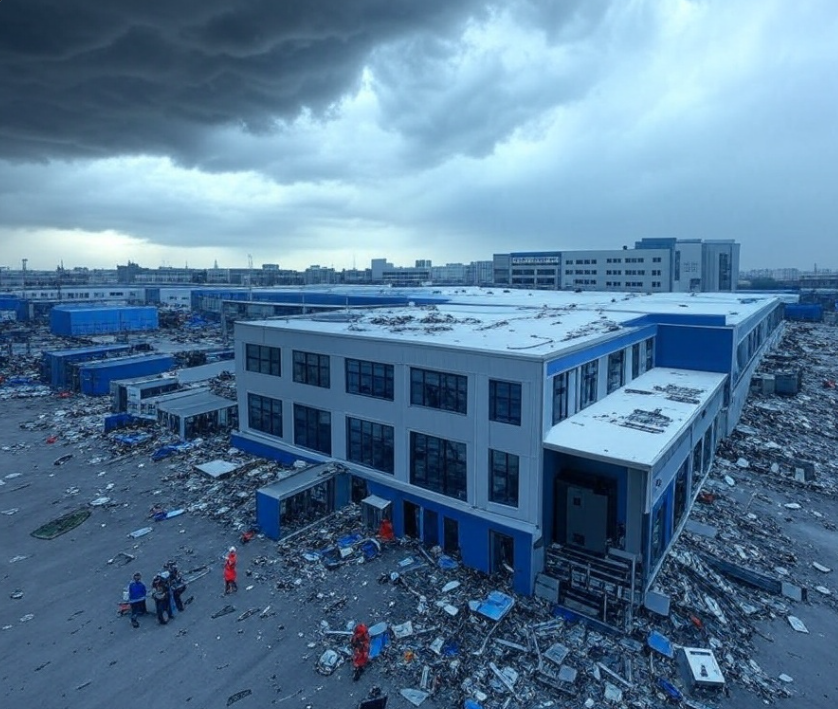 A powerful windstorm struck northern China on April 14, 2025, disrupting operations in Beijing, Hebei, and Tianjin—key hubs for electronics manufacturing. Transportation halts and production slowdowns in this region, which produces 25% of the world’s semiconductors and IT components, have sent ripples through global supply chains, particularly for indirect procurement teams reliant on IT hardware and automation equipment. With U.S.-China trade tensions already straining electronics sourcing (April 15), this natural disaster adds another layer of complexity.
How can indirect procurement professionals manage such disruptions in a critical sourcing region? Let’s explore actionable strategies to weather this storm and build resilience for the future.
Understanding the Impact on Electronics Supply Chains
The effects of windstorms are significant for indirect procurement, as northern China is a linchpin for electronics manufacturing. Beijing and Tianjin host major semiconductor plants, while Hebei supports ancillary industries like circuit board production. The storm halted transportation networks, delaying shipments of IT hardware like servers and networking equipment by up to two weeks, according to early reports. Production lines at factories in the region faced power outages and worker shortages, reducing output by an estimated 15%. A two-week delay could push back critical upgrades for a mid-sized enterprise with a $2 million annual IT hardware spend, risking $50,000 in operational downtime.
This disruption compounds existing challenges. Tariffs on Chinese imports, now at 20% (with much higher potential increases), have already driven up costs for electronics. The windstorm exacerbates this by tightening supply, potentially increasing prices by an additional 10% as manufacturers pass on losses. Indirect procurement teams, often seen as cost centers, face pressure to manage these cost spikes while ensuring continuity for IT and automation needs, such as servers for data centers or sensors for smart facilities. The stakes are high—failure to secure timely supplies can stall digital transformation projects, impacting organizational competitiveness.
Building Resilience Through Supplier Diversification
Diversification is a proven strategy for mitigating risks in volatile regions, as highlighted in our recent tariff discussion (April 15). The windstorm underscores the need to reduce reliance on northern China for electronics sourcing. Taiwan, which produces 60% of the world’s semiconductors, offers a viable alternative with lower exposure to mainland China’s weather risks. South Korea, another electronics hub, has seen a 20% increase in IT hardware exports in 2024, making it a strong candidate for diversification. For instance, a global retailer recently shifted 30% of its server sourcing to Taiwan, avoiding disruptions during the windstorm while saving 5% on costs due to competitive pricing.
Indirect procurement teams should conduct a supplier risk assessment, mapping exposure to natural disasters alongside tariff risks. Dual-sourcing—maintaining two suppliers for critical items like automation equipment—can ensure continuity. For example, during Coachella 2025, procurement teams pivoted to Mexican suppliers for lighting when faced with delays (April 14); a similar approach can work for electronics, with secondary suppliers in Southeast Asia or Europe ready to step in. Building these relationships now, before the next disruption, positions your team to act swiftly when crises hit.
Strengthening Contingency Planning and Contracts
Effective contingency planning is crucial for managing disruptions like the windstorm. Start by developing a business continuity plan tailored to electronics supply chains, identifying alternative shipping routes and backup suppliers. For example, rerouting shipments through South Korean ports instead of Tianjin can bypass regional delays, possibly increasing lead times by 10%. Stockpiling critical IT components—like a 30-day buffer of servers—can also mitigate short-term shortages, though this requires careful cost-benefit analysis given storage costs.
Contracts should include flexibility to adapt to disruptions. Negotiate force majeure clauses that account for natural disasters, allowing for delayed deliveries without penalties. Include adjustable pricing terms to manage cost fluctuations—during the windstorm, a 10% price adjustment clause could have saved a company $100,000 on a $1 million electronics contract. The Santo Domingo nightclub collapse (April 10) highlighted the importance of supplier vetting; ensure your electronics suppliers have robust disaster recovery plans, verifying their ability to resume operations quickly after events like this windstorm.
Key Takeaways
The windstorm in northern China is a wake-up call for indirect procurement teams. Understand the impact by quantifying delays and cost increases in your electronics supply chain, prioritizing IT hardware and automation equipment. Diversify your supplier base by exploring alternatives like Taiwan and South Korea to reduce reliance on high-risk regions. Strengthen contingency planning with business continuity measures and flexible contracts, ensuring agility in the face of disruptions. By acting proactively, indirect procurement can turn this challenge into an opportunity to enhance resilience and strategic value.
Stay tuned to Indirect Impact for more insights on navigating global supply chain risks!

Back to Top