




By clicking the “I Accept” button, or by accessing, participating, or submitting any information, or using the Jabil Global Intelligence Portal or any of its associated software, you warrant that you are duly authorized to accept the Global Intelligence Portal Terms and Conditions on behalf of your Company, intending to be legally bound hereby, and your company shall be bound by the terms and provisions of the Global Intelligence Portal Terms and Conditions, accessible under the following link Portal T&Cs.
Global Category Intelligence
Q2 2025
Global Category Intelligence
Q2 2025
U.S. Port Congestion Signals Logistics Delays—How to Respond
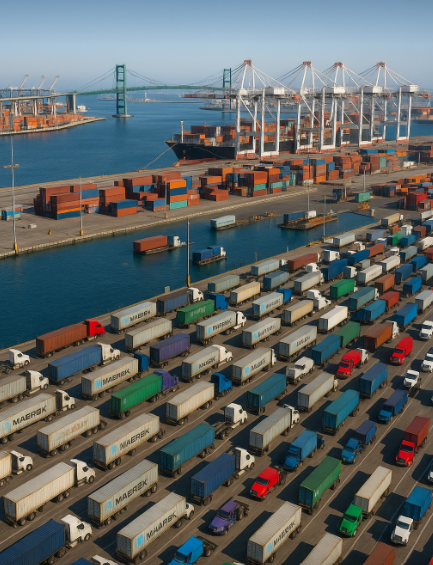 U.S. ports are sounding the alarm as congestion reaches critical levels this week, with delays surging 15% from Los Angeles to New York due to labor shortages and a spike in import volumes (Port Authority, April 2025). The Port of Los Angeles, handling 20% of U.S. imports, reported a 25% increase in container dwell time, averaging seven days compared to five in March. The Port of New York-New Jersey, the East Coast’s largest hub, has slowed 15% of inbound shipments, with 30 vessels waiting offshore as of April 16. The root causes include a 10% labor shortage—exacerbated by ongoing union negotiations—and a 12% surge in imports ahead of tariff hikes rumored for May (American Association of Port Authorities, 2025).
For indirect procurement teams, this bottleneck threatens $150 million in MRO supplies and IT hardware shipments, critical for facility operations and digital transformation projects. Logistics costs are climbing—up $500 per container—potentially adding $25 million annually for firms moving 50,000 containers. This disruption echoes global challenges like piracy in the Singapore Straits (April 17), where $3 trillion in trade is at risk, underscoring the need for resilient supply chains. As we approach our "Global Procurement Spotlight" series launching May 1 with Singapore, this crisis highlights the urgency of proactive strategies.
Impact on Indirect Procurement
This congestion directly impacts indirect procurement categories critical to operations. MRO supplies, valued at $50 million monthly for a typical U.S. manufacturer, face delays that stall facility maintenance, risking $10 million in downtime costs. IT hardware, such as servers and network infrastructure, is equally vulnerable—$100 million in delayed shipments could derail digital transformation projects, costing $20 million in lost productivity. Smaller firms, reliant on single suppliers, face amplified risks, with 30% reporting stockouts in Q1. The congestion also disrupts supplier relationships, as vendors struggle to meet service-level agreements, potentially leading to penalties or contract renegotiations.
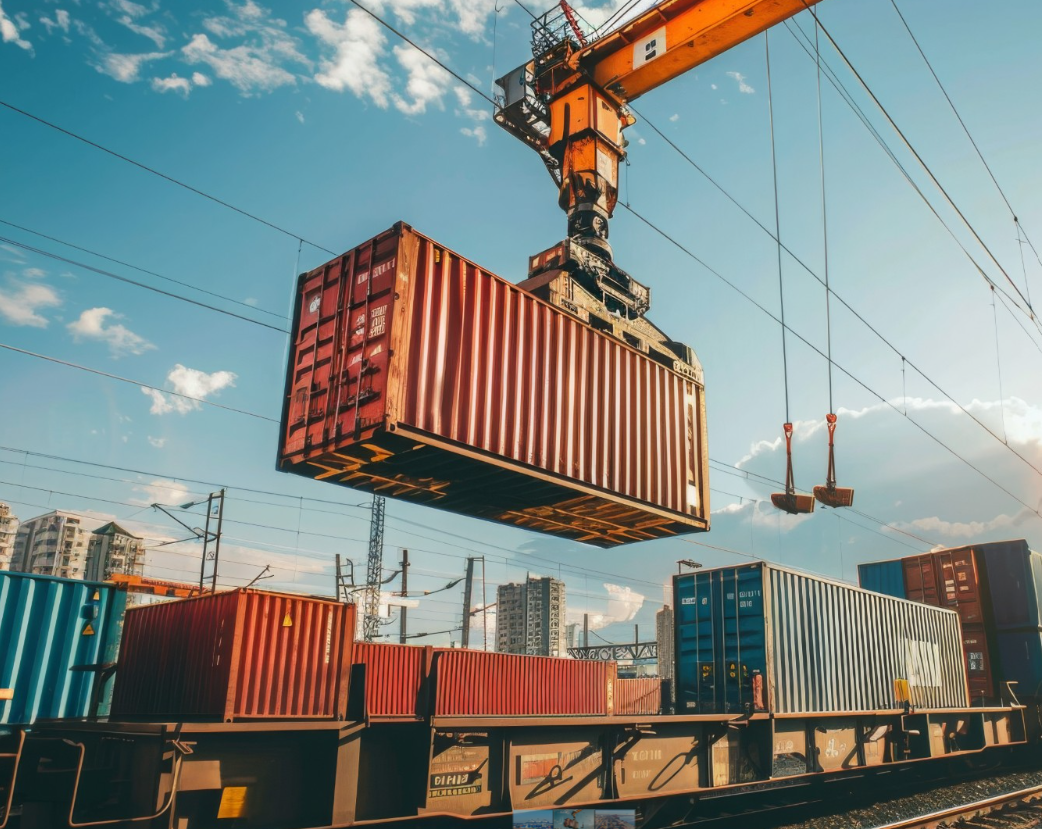 For procurement teams, the challenge lies in balancing cost control with supply continuity, especially as 60% of U.S. firms cite port delays as their top logistics concern (Deloitte, 2025).
Case Study: A Retailer’s Response
A mid-sized U.S. retailer, sourcing $30 million in MRO supplies annually through the Port of Los Angeles, faced a 20% shipment delay last week, risking $5 million in warehouse downtime during peak season preparation. The procurement team rerouted 10% of shipments to the Port of Oakland via rail, cutting delays by three days and saving $1 million in penalties. They stockpiled two weeks of critical supplies—bearings and conveyor belts—avoiding $2 million in production losses. By negotiating flexible delivery windows with suppliers, they maintained 95% on-time performance. This case underscores the value of agility, a lesson we’ll explore further in our Singapore spotlight on May 1.
Strategies to Mitigate Delays
.2025-04-18-16-02-01.png) Indirect procurement teams can counter this crisis with targeted strategies. First, reroute shipments through secondary ports like Oakland or Savannah, where dwell times are 20% shorter (Port Authority, 2025). Rail transport from these ports can cut delays by 25%, saving $500,000 for 1,000 containers monthly. Second, stockpile critical MRO supplies and IT hardware for four weeks, a tactic that saved a tech firm $3 million during a 2024 port strike (Procurement Leaders, 2025). Third, diversify supplier bases—relying on a single port increases risk by 40% (Deloitte, 2025). Partner with regional vendors in Mexico or Canada, where near-shoring reduces lead times by 15% (April 4). Fourth, leverage technology: AI forecasting tools like IBM Supply Chain Insights can predict delays, optimizing routes and saving $1 million in logistics costs for 10,000 containers annually. Finally, negotiate flexible contracts with suppliers, incorporating force majeure clauses to mitigate penalties during disruptions.
Indirect procurement teams can counter this crisis with targeted strategies. First, reroute shipments through secondary ports like Oakland or Savannah, where dwell times are 20% shorter (Port Authority, 2025). Rail transport from these ports can cut delays by 25%, saving $500,000 for 1,000 containers monthly. Second, stockpile critical MRO supplies and IT hardware for four weeks, a tactic that saved a tech firm $3 million during a 2024 port strike (Procurement Leaders, 2025). Third, diversify supplier bases—relying on a single port increases risk by 40% (Deloitte, 2025). Partner with regional vendors in Mexico or Canada, where near-shoring reduces lead times by 15% (April 4). Fourth, leverage technology: AI forecasting tools like IBM Supply Chain Insights can predict delays, optimizing routes and saving $1 million in logistics costs for 10,000 containers annually. Finally, negotiate flexible contracts with suppliers, incorporating force majeure clauses to mitigate penalties during disruptions.
Looking Ahead
The U.S. port congestion crisis highlights the fragility of global supply chains, a theme we’ll explore in our "Global Procurement Spotlight" series launching May 1 with Singapore. As trade volumes grow—projected to rise 10% by Q3 (World Trade Organization, 2025)—procurement teams must prioritize resilience. This week’s delays could persist into May if labor disputes escalate, with 40% of port workers threatening strikes (American Association of Port Authorities, 2025). Our daily insights will keep you informed—next week, we’ll cover piracy patrols, tariffs, windstorm lessons, ESG pressures, and a Singapore preview (April 21-25). Make Indirect Impact your daily habit to navigate these challenges with confidence. Check back Monday for more strategies to stay ahead!
Key Takeaways: Mitigating U.S. Port Congestion
-
Reroute Shipments: Use secondary ports like Oakland—cut delays by 25%, save $500,000/month
-
Stockpile Essentials: Store 4 weeks of MRO/IT hardware to avoid $3M in losses
-
Diversify Suppliers: Partner regionally (Mexico/Canada) to reduce lead times by 15%
-
Leverage AI: Use forecasting tools to save $1M in logistics costs

Back to Top