




By clicking the “I Accept” button, or by accessing, participating, or submitting any information, or using the Jabil Global Intelligence Portal or any of its associated software, you warrant that you are duly authorized to accept the Global Intelligence Portal Terms and Conditions on behalf of your Company, intending to be legally bound hereby, and your company shall be bound by the terms and provisions of the Global Intelligence Portal Terms and Conditions, accessible under the following link Portal T&Cs.
Global Category Intelligence
Q2 2025
Global Category Intelligence
Q2 2025
The AI Regulation Wave: How New Global Policies Impact IT Procurement in 2025
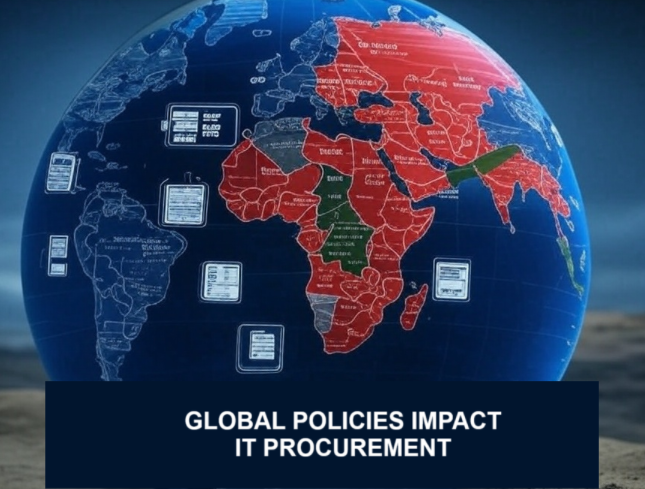 As we move deeper into 2025, a wave of AI regulations is reshaping the global tech landscape, with significant implications for procurement professionals, especially in the EMEA region. The EU’s AI Act, now fully enforceable since late 2024, sets a stringent benchmark, while the U.S. and China have introduced their frameworks this year. For teams sourcing IT infrastructure, cloud services, software, and professional services, these policies aren’t just background noise—they’re reshaping vendor selection, contract terms, and cost structures. Here’s what procurement leaders need to know to navigate this new reality.
Understanding the Global Regulatory Landscape
The regulatory landscape is complex and fast-moving. The EU AI Act categorizes AI systems by risk, imposing strict requirements on “high-risk” applications—like those used in hiring or supply chain analytics. Vendors must provide transparency, conduct audits, and ensure human oversight, with non-compliance fines reaching up to 7% of global revenue. In the U.S., a January 2025 executive order mandates transparency for AI in federal contracts, impacting software and cloud providers. China’s recent guidelines, meanwhile, prioritize data security, requiring firms to localize data storage—a challenge for cross-border IT sourcing. The EU’s rules are the most immediate concern for EMEA-based procurement teams, but global suppliers must comply with this patchwork of standards.
How AI Regulations Reshape IT Procurement
These regulations directly affect IT procurement. Vendor selection now demands rigorous due diligence—suppliers must prove compliance with the EU AI Act’s high-risk criteria or U.S. transparency rules. This means longer procurement cycles as teams verify certifications and audit trails, particularly for cloud services hosting AI workloads. Hardware sourcing faces hurdles too: export controls on AI-critical components like GPUs, tightened by U.S.-China tensions, are driving up costs and limiting availability. Software procurement isn’t immune either—AI tools for warehouse automation or risk management must meet ethical standards, forcing buyers to renegotiate licenses or seek new providers. Budgets are feeling the pinch as compliance costs trickle down.
Balancing Risk and Sustainability Challenges
Risk management takes center stage in this environment. Non-compliance isn’t just a vendor problem—it’s a procurement liability. Fines aside, failing to meet regulatory standards can delay projects, especially for CapEx initiatives like data center expansions or automation rollouts. Reputational damage is another concern—EMEA firms, often held to high ethical standards, can’t afford to partner with non-compliant suppliers. Then there’s the sustainability angle: AI’s energy demands are staggering. Data centers powering AI models consume vast amounts of electricity, clashing with the EU’s green goals. Procurement teams must balance innovation with environmental responsibility, seeking energy-efficient solutions or renewable-powered providers to align with corporate sustainability targets.
Actionable Steps for Procurement Teams
So, how can procurement professionals adapt?
-
Start with vendor audits—ensure your IT suppliers meet the EU AI Act’s requirements, especially for high-risk systems.
-
Renegotiate contracts to include compliance clauses, protecting your organization from downstream risks.
-
Explore alternative suppliers outside traditional U.S.-China supply chains for hardware, even if it means higher upfront costs.
-
On the software side, prioritize tools with built-in transparency features to future-proof your stack.
-
Sustainability-wise, favor cloud providers using renewable energy—many in the EMEA region, like those in the Nordics, are leading the charge.
-
Tap professional services for legal and compliance expertise; navigating this regulatory maze often requires specialized support.
Turning Challenges into Opportunities
The AI regulation wave is here to stay, and for EMEA procurement teams, it’s a call to action. Staying ahead means embedding compliance into every sourcing decision, from cloud contracts to hardware specs. It’s also an opportunity to lead on sustainability, ensuring AI adoption doesn’t come at the planet’s expense. As 2025 progresses, those who adapt will turn regulatory challenges into a competitive edge.
Key Takeaways
-
Audit IT vendors for EU AI Act compliance to avoid fines and delays.
-
Renegotiate contracts with clear regulatory clauses to mitigate risks.
-
Source hardware from diverse suppliers to bypass U.S.-China export controls.
-
Prioritize energy-efficient AI solutions to align with EMEA sustainability goals.
-
Leverage professional services to navigate complex global AI regulations.

Back to Top