




By clicking the “I Accept” button, or by accessing, participating, or submitting any information, or using the Jabil Global Intelligence Portal or any of its associated software, you warrant that you are duly authorized to accept the Global Intelligence Portal Terms and Conditions on behalf of your Company, intending to be legally bound hereby, and your company shall be bound by the terms and provisions of the Global Intelligence Portal Terms and Conditions, accessible under the following link Portal T&Cs.
Global Category Intelligence
Q2 2025
Global Category Intelligence
Q2 2025
ALERT – China Boosts Air Cargo Capacity, Easing Procurement Pressures
26 February 2025
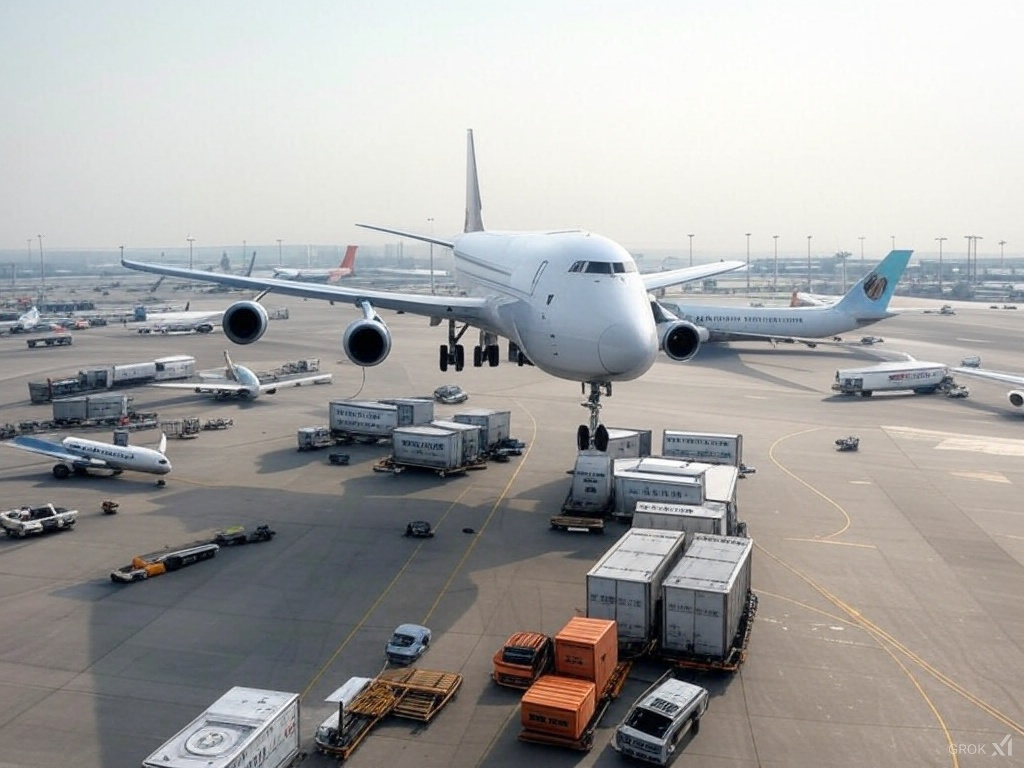 China is significantly expanding its air cargo operations and international freight routes, aiming to enhance global logistics capacity and streamline cross-border trade. This strategic initiative, announced today by Chinese authorities, is set to revolutionize the landscape for indirect procurement professionals worldwide.
The comprehensive plan, a collaborative effort by the General Administration of Customs, National Immigration Administration, and Civil Aviation Administration of China (CAAC), focuses on expediting customs clearance processes and broadening freighter networks. The move comes in response to the explosive growth in e-commerce and the burgeoning intra-Asia trade, with China's cross-border e-commerce exports surging by 36.72% to USD 38.16 billion in the first half of 2024
Context and Background
China’s outsized role in global supply chains makes this a game-changer for procurement teams managing indirect spend, such as transportation, logistics services, and operational supplies. In 2024, the country handled 8.98 million tons of cargo and mail, a 22.1% jump year-on-year, far outpacing the global average of 11.8%, per the International Air Transport Association (IATA). With international passenger flights still lagging at 84% of pre-pandemic levels (6,400 weekly flights), all-cargo operations are under pressure to fill the gap—critical for moving goods like MRO supplies and e-commerce shipments that procurement pros oversee.
Details of the Initiative
The plan expands routes from key hubs—Beijing, Shanghai, Guangzhou, and the Ezhou cargo hub in Hubei—while encouraging airlines to scale up freighter fleets and regular international cargo schedules. A major driver is cross-border e-commerce, which accounted for 61% of outbound cargo at domestic logistics hubs in the first half of 2024, according to the China Federation of Logistics and Purchasing. Goods like clothing, beauty products, and home textiles—compact and high-variety—dominate this space, with trade hitting 1.88 trillion yuan in the first three quarters of 2024, up 11.5% year-on-year. The initiative also aims to sync domestic and international flight networks, enhancing connectivity for intra-Asia trade, which FedEx predicts will double in volume as regional consumption rises.
Impact on Indirect Procurement
For indirect procurement teams, this could mean smoother logistics and shorter lead times for non-production spend categories. More freighters—SF Airlines now operates 87, while China’s big three carriers (Air China, China Southern, China Eastern) run 49 wide-body units—offer greater carrier choice, potentially strengthening negotiation leverage. However, the explosive e-commerce boom and capacity crunch (80% of global e-commerce relies on air freight, per IATA) may spike freight rates, challenging cost containment efforts. Procurement pros could see faster delivery of operational goods—MRO supplies, office equipment, or e-commerce-driven packaging—but must brace for volatility. Adapting vendor strategies to lock in capacity or diversify carriers will be key as demand outpaces supply.
Industry Response and Outlook
Chinese carriers are stepping up: YTO Airlines debuted the domestic C909 on Central Asia routes, while Postal Airlines operates 39 freighters. Kawal Preet, FedEx Asia Pacific President, recently flagged Asia as the second-most integrated trade region after the EU, hosting five of the world’s fastest-growing trade corridors. She forecasts intra-Asian exports doubling, fueled by trade agreements and a shift toward regional consumption over Western exports—a trend procurement teams can leverage for localized sourcing. Amid rising competition, China’s air cargo operators are carving out a bigger global presence, competing with Western rivals and reshaping logistics dynamics through at least 2030.
Key Takeaway
Indirect procurement professionals should act now: revisit logistics contracts to secure capacity, monitor freight rate trends, and explore partnerships with expanding Chinese carriers. With air cargo demand tightening and Asia’s trade footprint growing, staying agile is non-negotiable. This is a chance to optimize supply chains for speed and resilience—don’t let it slip by

Back to Top