




By clicking the “I Accept” button, or by accessing, participating, or submitting any information, or using the Jabil Global Intelligence Portal or any of its associated software, you warrant that you are duly authorized to accept the Global Intelligence Portal Terms and Conditions on behalf of your Company, intending to be legally bound hereby, and your company shall be bound by the terms and provisions of the Global Intelligence Portal Terms and Conditions, accessible under the following link Portal T&Cs.
Global Category Intelligence
Q2 2025
Global Category Intelligence
Q2 2025
FEATURE: How Indirect Procurement Fueled the 2025 Coachella Supply Chain
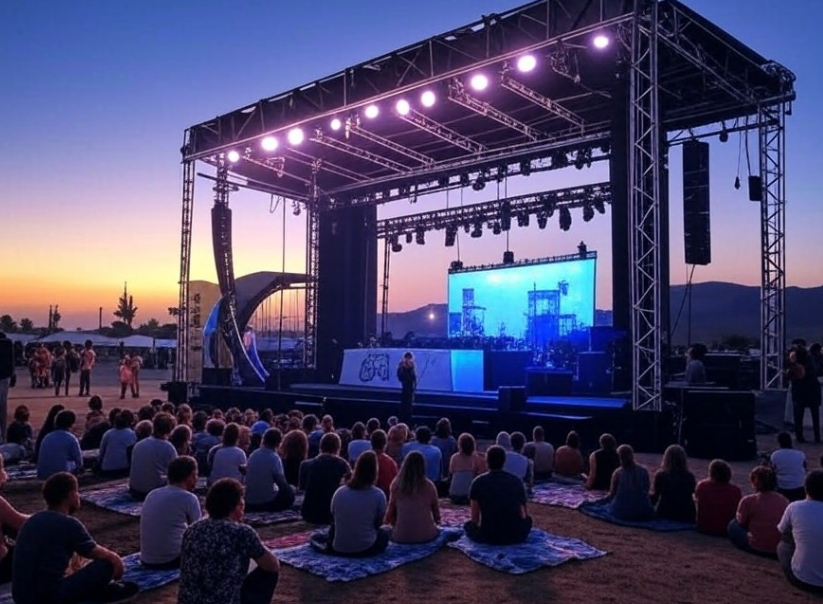 Coachella 2025’s first weekend concluded on April 13, drawing significant attention as one of the world’s premier music and arts festivals, held annually in Indio, California, and known for its large-scale production and global cultural impact. Behind the event’s seamless execution was a complex logistical operation powered by indirect procurement teams navigating intense challenges. From addressing U.S.-China trade disruptions to achieving stringent sustainability objectives, procurement professionals ensured operational success—here’s how they accomplished it.
Behind the Scenes: A Supply Chain Under Siege
Coachella’s scope is extensive, accommodating hundreds of thousands of attendees and requiring temporary infrastructure, advanced technology, and a vast vendor network. Indirect procurement teams were responsible for sourcing critical components, including portable stages, energy-efficient lighting systems, and AI-driven crowd management technology, all while contending with global supply chain constraints. Last week, we reported on U.S.-China trade tensions at the Panama Canal (April 8), where delayed shipments of technology components—such as those essential for Coachella’s smart ticketing systems—threatened project timelines. Additionally, new global AI regulations (April 11) further complicate the sourcing of technology solutions, requiring rapid adaptation.
Sustainability was a critical priority. Coachella established a 2025 target to reduce its carbon footprint by 20%, aligning with strategies discussed at the Big Buyers Working Together event (April 3). This necessitated sourcing recyclable stage materials, solar-powered generators, and low-emission transportation options. Procurement teams leveraged near-shoring strategies (April 4), securing MRO supplies like cabling and lighting from Mexico to circumvent tariff-related delays from China. When a Chinese shipment of LED panels was delayed at the Panama Canal, procurement swiftly pivoted to a Mexican supplier, ensuring the festival’s lighting systems were operational as planned.
Resilience in Action: Learning from Recent Crises
The Santo Domingo nightclub collapse (April 10) was a critical reminder of the importance of robust supplier vetting. Coachella’s procurement teams responded proactively, conducting thorough safety compliance checks on all infrastructure providers—from stage construction firms to tent suppliers—to mitigate risks to attendees. This focus on resilience proved effective: Despite trade and regulatory pressures, Coachella’s setup was completed on schedule, with no safety incidents reported.
New AI regulations presented an additional challenge. The festival’s crowd management systems, which utilize AI to monitor foot traffic and prevent overcrowding, required compliance with updated policies. With restrictions on certain Chinese vendors, procurement shifted to European suppliers, sourcing GDPR-compliant solutions from Germany. This strategic pivot enabled Coachella to implement its smart technology while adhering to legal requirements, underscoring procurement’s ability to navigate complex regulatory landscapes.
Key Takeaways
Coachella 2025 provides a model for procurement under pressure:
-
First, near-shoring is a strategic advantage—establishing relationships with Latin American suppliers can mitigate trade disruptions, as demonstrated by the timely lighting procurement from Mexico.
-
Second, resilience hinges on rigorous supplier vetting; the Santo Domingo collapse highlights the need to prioritize safety alongside efficiency.
-
Third, sustainability is non-negotiable—integrating environmental goals into sourcing decisions, such as Coachella’s use of solar-powered systems, aligns with 2025’s net-zero priorities while enhancing organizational reputation.
Indirect procurement’s capacity to adapt in real time transformed potential disruptions into a successful festival operation. As global challenges intensify, these lessons offer a framework for managing large-scale initiatives in an era of uncertainty. Stay tuned to Indirect Impact as we explore more real-world applications of procurement resilience!

Back to Top