


By clicking the “I Accept” button, or by accessing, participating, or submitting any information, or using the Jabil Global Intelligence Portal or any of its associated software, you warrant that you are duly authorized to accept the Global Intelligence Portal Terms and Conditions on behalf of your Company, intending to be legally bound hereby, and your company shall be bound by the terms and provisions of the Global Intelligence Portal Terms and Conditions, accessible under the following link Portal T&Cs.
Jabil's Global Mechanicals Intelligence Archive
Global Mechanicals Intelligence
Q2 2024 | APRIL- JUNE
Jabil's Global Mechanicals Intelligence Archive
Global Mechanicals Intelligence
Q2 2024 | APRIL- JUNE
BATTERIES
MARKET OVERVIEW
-
One of the primary drivers of the battery market is the demand for electric vehicles. As governments worldwide set targets for reducing carbon emissions and promoting cleaner transportation, the demand for EVs and their batteries is expected to rise significantly.
-
Innovations in battery technology, such as solid-state batteries, may lead to improvements in energy density, cost reductions, and enhanced safety features, driving market growth.
-
The growth of renewable energy sources like wind and solar has created a need for efficient energy storage solutions. Batteries are crucial in storing this energy, allowing for a more reliable and consistent power supply.
-
Portable electronic devices like smartphones, tablets, and laptops require high-performance batteries with longer life spans, contributing to the overall demand for advanced battery technologies.
DEMAND COMMENTARY
-
The latest estimates indicate that sales of new energy vehicles (NEVs) in China have dropped by almost 40% compared to January. This decline in electric vehicle sales in China has constrained the demand for lithium among battery manufacturers.
-
Demand for consumer and power tool applications continues to soften.
-
The projected surplus for lithium remains considerable in 2024; the global lithium supply is expected to enter a deficit relative to demand by 2028.
SUPPLY COMMENTARY
-
In general, suppliers have surplus capacity, ensuring stable supply with low risk for batteries. They are also flexible in accommodating additional demand or pull-in requirements.
-
"Pull-in requirements" typically refer to situations where customers request earlier delivery or increased quantities of products than originally planned. This could be due to unexpected changes in demand or other factors that necessitate accelerating production and delivery schedules.
-
Lead times are flat at 30-45 days for lithium metal batteries and 45–60 days for lithium rechargeable batteries.
-
The supply base remains stable, with no signs of suppliers exiting the market.
PRICING SITUATION
-
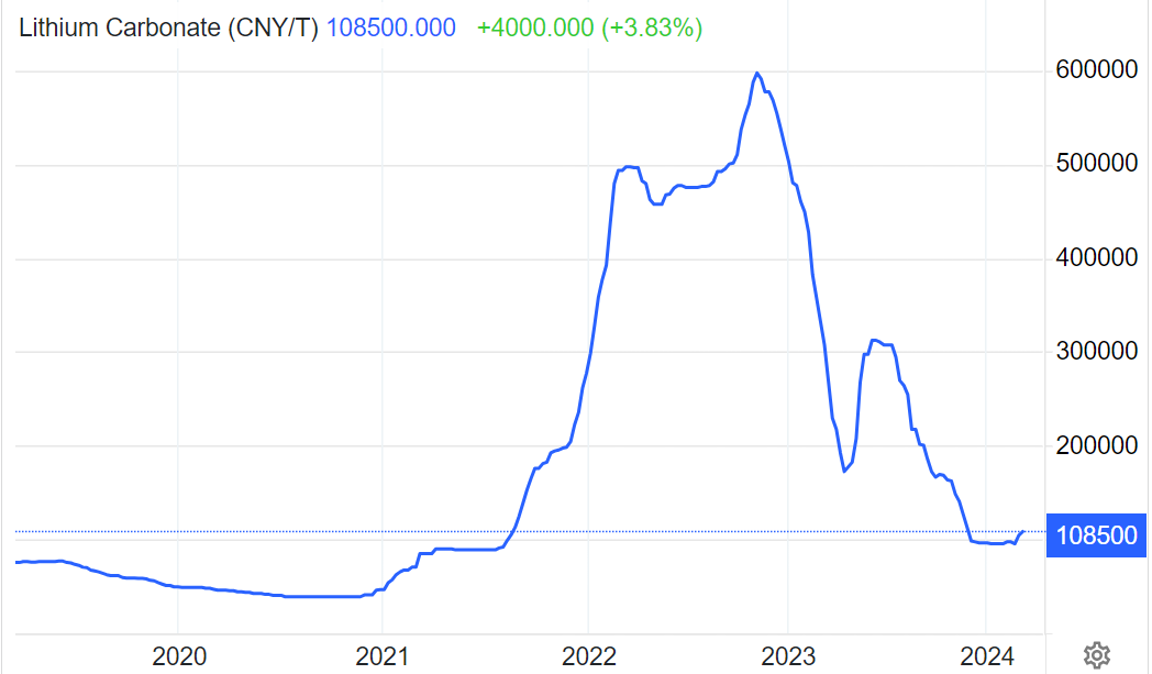
Lithium carbonate prices eased to CNY 95,500, matching the over-two-year low from mid-January. This marked a substantial decline of nearly 80% compared to last year. Cobalt decreased by 585 USD/t, or 2%, since the beginning of 2024.
-
Cathode material (Li, Ni, Co, Mn) contributes 50% of cell cost, and Anode material (C) contributes another 12%; with raw materials prices dropping and demand softening, battery prices are anticipated to continue to be downtrend in 2024
-
The price of lithium carbonate changes every CNY 10,000/t, impacting the cost of lithium rechargeable cells by about 1%.
-
Anticipate to 2H24, lithium battery prices will likely drop back to 2H 2021.
KEY TAKEAWAYS
- Efforts to repurpose spent batteries from EVs and other applications will gain traction, providing a secondary market for batteries and reducing waste.
- Major manufacturers are expected to expand their global production capacities further to meet future growing demand, with new manufacturing plants coming online in various regions.
- There will be continued competition among different battery types (e.g., lithium-ion, solid-state, sodium-ion), each with advantages and challenges.

Back to Top